Life in San Jose 2026: Culture, Jobs, Housing and the Real Bay Area Experience Insights

Updated: Sep 4
San Jose can be hard to explain in one sentence. It is the largest city in the Bay Area, the civic center of Silicon Valley, and still a place where people argue about the best taco truck, compare commute routes, and spend Saturday mornings at a farmers market or a youth soccer field.
By 2026, life in San Jose feels both familiar and changed. The tech economy still shapes the city, but remote work, artificial intelligence, rising housing costs, climate concerns, and a renewed interest in neighborhood life have altered the rhythm. San Jose is not the postcard version of the Bay Area. It is more spread out, more residential, and often more practical. That is part of its appeal.
For potential movers, the city offers big opportunity with real trade-offs. For locals, it remains a place of reinvention, where families, students, engineers, artists, small business owners, and lifelong residents share the same streets, even if they experience the city in very different ways.

San Jose culture is quieter than San Francisco and more local than people expect
San Jose does not always announce itself. It has fewer postcard landmarks than San Francisco and less beach-town romance than Santa Cruz. Its culture lives closer to the ground, in neighborhoods, food corridors, parks, schools, faith communities, and weekend events.
The city’s identity is deeply shaped by immigration and migration. Mexican American history is central here, as are Vietnamese, Filipino, Indian, Chinese, Japanese, Persian, and many other communities. That mix shows up in the food first. A normal week might include Vietnamese coffee near Little Saigon, birria in East San Jose, dosa in a South Bay strip mall, sushi in Japantown, and a family dinner in Willow Glen.
San Jose’s strongest cultural asset is its everyday diversity. It is not unusual to hear three or four languages during one grocery run. Schools, libraries, and community centers often become meeting points for families from many backgrounds. That gives the city a practical openness, though not a perfect one. Like the wider Bay Area, San Jose still wrestles with income gaps, displacement, and the question of who gets to stay.
Downtown has grown into a more active arts and events district, even if it still feels inconsistent block by block. San Pedro Square remains a reliable gathering spot. The SAP Center draws concerts, Sharks games, and touring shows. Local traditions such as Christmas in the Park, Viva CalleSJ, Cinequest, and San Jose Jazz Summer Fest give residents reasons to come together outside work.
A longtime resident from the Rose Garden area described San Jose this way in a neighborhood conversation: “People think we are just tech and traffic. But my kids grew up going to library events, street festivals, and their grandparents’ favorite bakeries. That is the San Jose I know.”
That comment gets at something true. San Jose is not always flashy, but it is lived in.
The 2026 economy still runs on tech, but the job story has become wider
San Jose remains one of the most important job centers in the United States because of its place in Silicon Valley. The city and surrounding communities support major work in software, semiconductors, cloud computing, cybersecurity, robotics, medical devices, clean energy, and artificial intelligence.
AI is the loudest trend in 2026. It affects hiring across the region, not just at large tech companies. Startups are building AI tools for health care, logistics, design, education, and finance. Larger employers are also reshaping roles around automation and data systems. This has created new openings for machine learning engineers, data infrastructure specialists, product designers, security engineers, and people who can connect technical systems to real customer needs.
At the same time, tech hiring is more selective than it was during some earlier boom years. Companies still recruit heavily, but they also expect sharper skills and clearer results. The easy-growth era has cooled. People moving to San Jose for work should not assume that being near Silicon Valley guarantees a quick offer.
The broader job market matters too. San Jose needs nurses, electricians, teachers, construction workers, city staff, restaurant workers, nonprofit employees, tradespeople, and logistics workers. Health care and education remain major anchors. So do small businesses, especially in food, repair, personal services, and home improvement.
A software contractor who moved from Texas to North San Jose summed up the opportunity and pressure well: “The network is real. I met people here in two months that I would not have met in two years elsewhere. But the cost of making a career bet here is high. You need a plan.”
That plan should include more than salary. Commute time, rent, child care, health insurance, and whether a role is remote, hybrid, or on-site can change the true value of a job. A higher paycheck can disappear quickly if housing and transportation costs are not managed.

Housing in San Jose remains the hardest part of the move
Housing is the issue that defines daily life for many people in San Jose. As of 2026, the market remains expensive by national standards. Buying a home is out of reach for many households, and renting still takes a large share of income for many workers.
Single-family homes dominate much of the city, especially in neighborhoods built during the postwar decades. That gives San Jose a suburban feel, with yards, driveways, and quiet streets. It also limits the supply of homes near jobs and transit. Newer apartments have been added in downtown, North San Jose, Berryessa, and near transit corridors, but demand remains strong.
For homebuyers, the main question is often not “Can I find a nice place?” but “What trade-offs can I live with?” A smaller condo near transit may beat a larger house with a long commute. A home in a warmer inland pocket may cost less than one closer to the Peninsula. Some buyers look south toward Morgan Hill or Gilroy, east toward the foothills, or north toward Milpitas and Fremont, depending on work and family needs.
Renters face their own choices. Downtown apartments may offer walkability and access to events. South San Jose can feel more residential and family-oriented. North San Jose often appeals to workers who want to stay close to major employers. Japantown, Willow Glen, and the Rose Garden can be charming, but prices reflect demand.
Accessory dwelling units, duplex rules, and denser infill projects have become a bigger part of the conversation. These options will not solve the housing shortage alone, but they give some families flexibility. A backyard cottage can house an aging parent, an adult child, or a renter who helps with the mortgage.
A renter in the Berryessa area shared a common compromise: “I gave up having a big place so I could be near transit and avoid driving every day. My apartment is small, but my life feels bigger because I am not always in the car.”
That is the San Jose housing equation in one story. Space, price, commute, and quality of life are always connected.
Daily life depends on neighborhood, commute, and climate
San Jose is large, and the experience changes a lot by neighborhood. Someone living near Santana Row may describe a polished mix of restaurants, shopping, and apartments. Someone in Evergreen may talk about schools, hills, and family routines. Someone in downtown may focus on nightlife, events, and walkability. Someone in Almaden may talk about trails, larger homes, and a quieter pace.
Transportation is one of the biggest daily factors. San Jose has VTA light rail and buses, Caltrain service to the Peninsula and San Francisco, and BART access through the Berryessa area, with long-planned extensions continuing to shape expectations for downtown and Santa Clara. Caltrain electrification has improved the regional rail experience for many riders on the corridor, but many San Jose residents still rely on cars.
The freeways are part of life: 101, 280, 680, 880, 87, and 85 all matter depending on where work, school, and errands sit. A few miles can mean a big difference during peak commute times. Hybrid work has softened some patterns, but traffic has not disappeared.
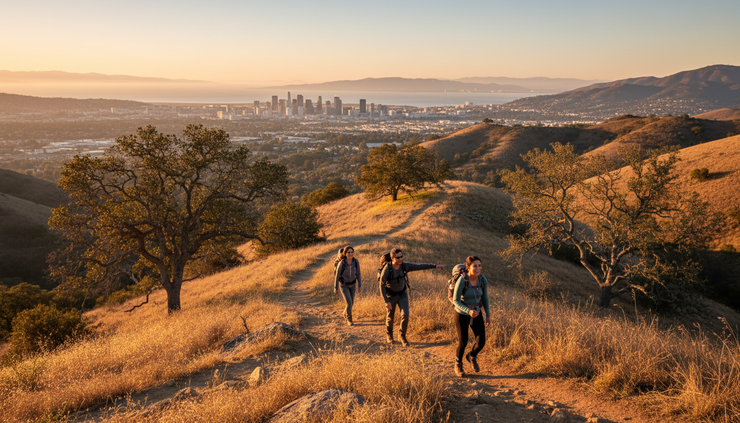
The climate is one of San Jose’s best features. The city tends to be warmer and sunnier than San Francisco, with fewer foggy days. Outdoor life is easy to build into a routine. Residents hike at Alum Rock Park, bike along creek trails, visit neighborhood parks, or drive to the Santa Cruz Mountains and coast.
Still, climate comfort now comes with climate awareness. Hotter summer days, wildfire smoke, drought cycles, and flood planning all shape Bay Area life. Air conditioning, shade, tree cover, and home energy costs matter more than they once did.
The pros and cons of living in San Jose are both real
San Jose rewards people who value opportunity, diversity, weather, and access to the broader Bay Area. It can wear down people who need affordability, fast commutes, or a dense urban feel on every block.
Strong job access
San Jose sits close to major employers, startups, hospitals, universities, and skilled trades work.
Cultural variety
Food, festivals, languages, and community groups reflect a wide mix of backgrounds.
Great weather
Sunny days and nearby parks make outdoor plans easy most of the year.
Regional access
San Francisco, Oakland, Santa Cruz, wine country, and the mountains are all within reach.
Family and community roots
Many neighborhoods have strong school, sports, library, and volunteer networks.
High cost of living
Housing, child care, insurance, dining out, and services can strain even solid incomes.
Car dependence
Some neighborhoods work well without a car, but many daily routines still require driving.
Uneven downtown energy
Downtown has strong pockets, but it can feel quiet compared with larger cities.
Housing trade-offs
Many residents choose between space, location, school preferences, and commute time.
Economic pressure
The gap between high earners and lower-wage workers affects who can stay long term.
For families, San Jose can be practical and supportive. Parks, youth sports, libraries, cultural schools, and family-owned restaurants create a grounded rhythm. For young professionals, the city may feel less social than San Francisco or Oakland unless they actively join groups, attend events, or live near downtown. For retirees, the weather and health care access appeal, but housing costs and taxes can be challenging.
For locals who grew up here, the emotional question is often whether the city still has room for them. Many have watched childhood friends move to Sacramento, the Central Valley, Texas, Nevada, Oregon, or Southern California because staying became too expensive. That loss is part of the real Bay Area experience too.
Community events keep the city connected
One of the best ways to understand San Jose is to show up. Attend a neighborhood association meeting, a Japantown festival, a downtown art walk, a Vietnamese community celebration, a Sharks game, a library program, or an open street event like Viva CalleSJ. The city feels different when streets close to cars and fill with bikes, strollers, food vendors, and music.
Community events also reveal San Jose’s scale. This is a city of more than one center. Downtown matters, but so do East San Jose, South San Jose, Berryessa, Cambrian, Almaden, Willow Glen, Japantown, Evergreen, and North San Jose. Each area has its own habits and loyalties.
A small business owner in East San Jose described weekend events as “the time when people remember this is a community, not just a place between home and work.” That line captures a common wish for the city in 2026. Residents want more places to gather, linger, and feel connected.
The most successful parts of San Jose are often the ones that mix daily needs with public life: a park near a library, apartments near transit, restaurants near housing, schools near safe walking routes, and plazas that invite people to stay. As the city grows, those details will matter more than any single project.

The real San Jose is practical, diverse, and still becoming itself
Life in San Jose in 2026 is full of promise, but it is not effortless. The city offers career access, cultural depth, good weather, and a strong sense of everyday community. It also asks residents to solve hard math around housing, transportation, and time.
For someone considering a move, the best advice is simple: spend time in the neighborhoods before choosing one. Try the commute at the hour you would actually travel. Visit on a weekday night, not just a sunny Saturday. Compare the cost of rent or a mortgage with the kind of life left over after paying it.
For locals, San Jose’s future depends on whether it can become more livable without losing the communities that made it worth living in. More housing choices, safer streets, stronger transit, shade, parks, and support for small businesses will shape the next version of the city.
San Jose may never fit the classic image of a Bay Area destination. That is fine. Its real story is broader and more useful: a city of work and family, ambition and compromise, invention and memory, where the Bay Area experience feels less like a postcard and more like daily life.


Comments